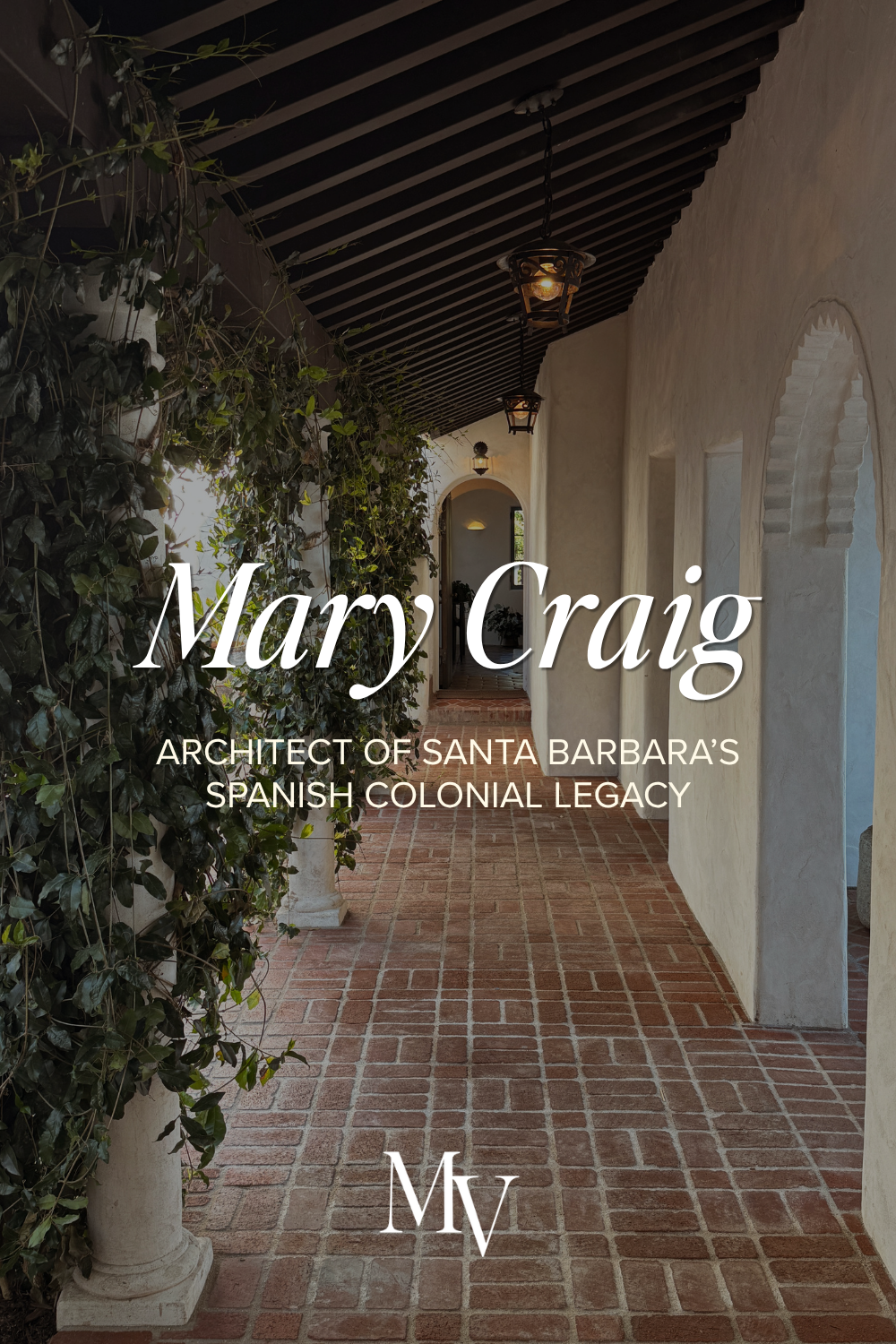
Mary Craig: Architect of Santa Barbara’s Spanish Colonial Legacy
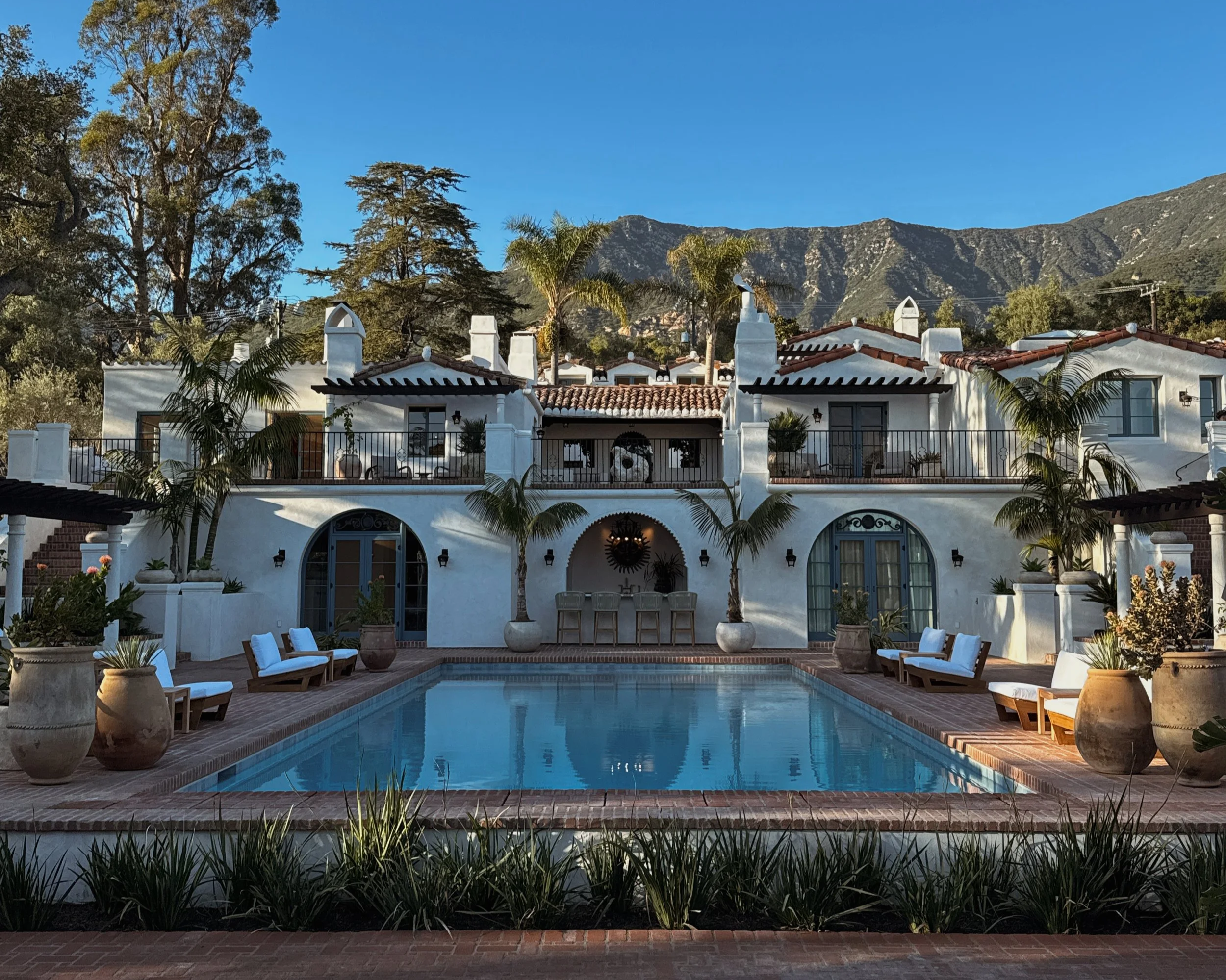
A 1929 Mary Craig property in Montecito. Tastefully reimagined by Xorin Balbes, and listed for sale by Nancy Kogevinas.
Santa Barbara’s architectural character is so distinctive that many visitors assume it appeared naturally—white stucco walls, red tile roofs, shaded arcades, and courtyards that blur the line between indoors and out.
But that visual identity did not happen by accident; it was shaped by a group of architects in the early 20th century who translated Mediterranean and Spanish precedents into something uniquely Californian.
Among them was Mary McLaughlin Craig, a pioneering architect whose work quietly helped define Santa Barbara’s residential landscape during one of its most formative architectural eras.
While many people recognize names like George Washington Smith or Lutah Maria Riggs, Mary Craig’s influence is equally woven into the city’s fabric—especially in the elegant homes and small residential enclaves that give Santa Barbara its enduring charm.
A Trailblazing Career in Early California Architecture
Mary McLaughlin Craig was born in 1889 and later moved to California, eventually settling in Santa Barbara during the city’s architectural renaissance in the early 20th century.
Unlike many of her contemporaries, Craig did not have formal architectural training, yet she became a respected designer during a time when the profession was overwhelmingly male-dominated.
In 1919, she married architect James Osborne Craig, and together they worked on projects throughout Southern California. After his death, Mary Craig continued their work and developed her own practice, focusing primarily on residential architecture in the Santa Barbara region.
From roughly 1925 through the mid-1940s, she designed homes and small developments that embodied the Spanish Colonial Revival style, taking hold across the region.
Her work is deeply embedded in Santa Barbara’s neighborhoods—proof that architectural influence often happens quietly.
Spanish Colonial Revival: Craig’s Architectural Language
During the 1920s and 1930s, Santa Barbara experienced an architectural transformation following the 1925 earthquake, when civic leaders embraced Spanish Colonial Revival as the city’s defining style.
Craig was one of the architects who helped carry that vision into residential neighborhoods.
Her designs typically included:
White stucco walls reflecting California sunlight
Terracotta roof tiles inspired by Spanish and Mediterranean precedents
Wood-beam ceilings and shaded arcades
Courtyard-centered floor plans
Human-scaled proportions that felt intimate rather than grand
These elements became hallmarks of Santa Barbara architecture and remain defining features of the region’s most beloved homes today.
Plaza Rubio: Craig’s Signature Contribution
Perhaps Mary Craig’s most visible and enduring project is Plaza Rubio, located directly across from the rose garden at the Santa Barbara Mission.
Designed in the mid-1920s, the development consists of seven Spanish Colonial homes arranged to complement the Mission’s historic architecture.
Rather than designing a single house, Craig approached Plaza Rubio as a cohesive neighborhood composition—a thoughtful blend of architecture, scale, and urban planning.
The result was a rare example of early Santa Barbara residential design that feels both intimate and architecturally significant.
Even today, the homes remain some of the most admired small-scale Spanish Colonial Revival residences in the city.
Homes That Defined Neighborhood Character
Craig’s work extended throughout Santa Barbara, Montecito, and the surrounding communities. Her portfolio included:
Private residences in Santa Barbara and Montecito
Beach cottages along the coast
Estate outbuildings and service structures
Small neighborhood developments
Many of these homes reflect a more livable and approachable version of the Spanish Colonial style—less monumental than some estates, yet deeply aligned with the region’s climate and lifestyle.
As historians have noted, Craig’s designs helped establish the modest residential interpretation of Spanish Colonial architecture that defines many of Santa Barbara’s most pleasant neighborhoods today.
A Pioneer Among Women Architects
Mary Craig worked during a time when female architects were rare. Yet she carved out a respected place in Santa Barbara’s architectural community alongside other pioneering women such as Lutah Maria Riggs and Julia Morgan.
Together, these architects expanded the possibilities of design and professional practice in early California.
Craig’s career demonstrated that architectural influence does not always require monumental buildings—sometimes it is expressed through thoughtful neighborhoods, carefully proportioned homes, and a sensitivity to place.
Mary Craig’s Lasting Legacy
Today, Mary McLaughlin Craig’s work can still be found quietly shaping Santa Barbara’s landscape.
Her homes are admired not only for their beauty but for their human scale and timeless livability—qualities that remain central to the region’s architectural identity.
In a city celebrated for its design heritage, Craig’s legacy lives on in the neighborhoods, courtyards, and white stucco homes that define Santa Barbara’s charm.
Discover Santa Barbara’s Architectural Heritage
If you’re drawn to the architecture of Santa Barbara—from Spanish Colonial Revival homes to historic estates—the legacy of architects like Mary Craig is part of what makes this region so special.
Many of the homes inspired by her work remain among the most sought-after properties in Santa Barbara and Montecito today.
Explore homes that reflect Santa Barbara’s architectural heritage, or connect with us to begin your search for a property rooted in the beauty and history of the Central Coast.
And for more stories about the architects and landmarks that shaped this region, follow @montecitovalley.